
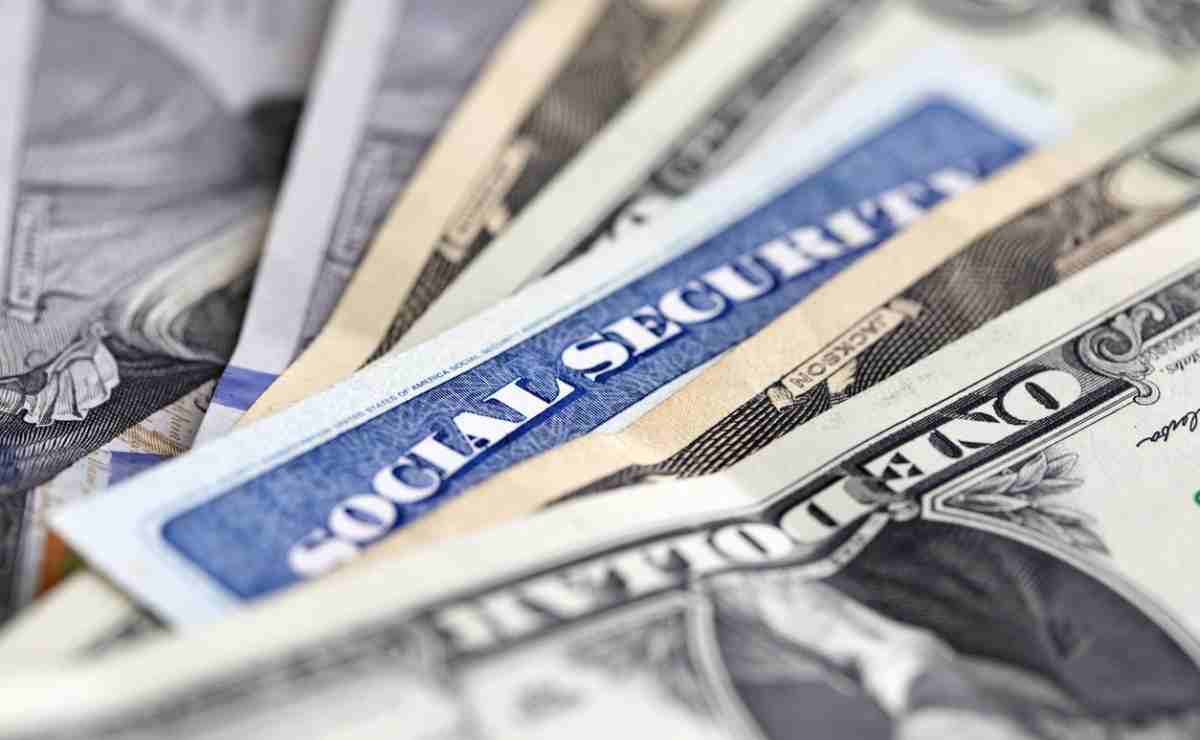
Social Security is heading toward a hard numbers problem that could hit retirees directly in their monthly checks. If Congress does nothing, the math points to a reduction of about $460 per month for millions of beneficiaries within the next decade.
A retiree who now receives $2,000 each month could soon be living on closer to $1,540. That change would not come from a new law cutting benefits, but from the system simply running out of reserves and paying only what it collects in real time.
Social Security and the risk of automatic benefit cuts
Social Security is built on two main trust funds, and the one that pays retirement and survivor benefits is under growing pressure. Projections show that by 2033, the reserves used to cover full payments may be depleted if no structural changes are made.
Once that point is reached, Social Security would not disappear. Payments would continue, but only at the level supported by incoming payroll taxes. That level is estimated at about 77% of promised benefits, which translates into an effective cut of roughly 20% across the board. For the current retirees and those nearing retirement, this scenario is already where they are.
What a $460 monthly loss really means
A reduction of $460 per month may sound manageable on paper, but over a year it adds up to more than $5,500. For households that depend heavily, or entirely, on Social Security income, that gap can be hard to absorb.
Many retirees structure their budgets around fixed costs that do not shrink easily. Rent or property taxes, utility bills, insurance premiums, and medical expenses tend to rise, not fall, with time. Losing nearly a quarter of monthly income forces difficult trade-offs. This is especially relevant for seniors who do not have significant savings or private pensions to fall back on. For them, Social Security is the core of what they can’t and can afford every day.
Who would be affected by the cuts
The potential reduction would not target a specific group. It would apply broadly to people receiving retirement benefits as well as those on Social Security Disability Insurance. Roughly 70 million Americans currently receive some form of Social Security payment. That includes older adults who have fully retired, workers who had to leave the labor force due to disability, and survivors receiving benefits after the death of a family member.
Younger workers would not be immune either. While the immediate impact would hit current beneficiaries first, future retirees would also face lower baseline benefits unless the system is rebalanced.
Why this issue keeps coming back
The financial strain on Social Security is not new. It comes from a mix of demographic and economic trends that have been building for years. People are living longer, which means benefits are paid out for more years. At the same time, the ratio of workers paying into the system compared to retirees drawing from it has been shrinking. Payroll tax income is no longer keeping pace with outgoing payments.
Without changes to taxes, benefits, or both, the trust fund reserves act as a temporary buffer. Once that buffer is gone, the law requires benefits to be reduced to match incoming revenue.
Key points one must understand
- Trust fund reserves for retirement benefits are projected to be depleted around 2033
- Incoming payroll taxes would cover only about 77% of scheduled benefits
- A $2,000 monthly benefit could drop by approximately $460
- Around 70 million people could be affected, including retirees and disabled workers
What happens next
For now, full benefits continue to be paid. No automatic cut is happening this year or next. But the closer the system gets to the depletion date, the fewer options remain that avoid sudden reductions.
Any long-term fix would require legislative action, and those decisions tend to become harder the longer they are delayed. In the meantime, retirees and near-retirees are left watching projections that point to smaller checks ahead.